
About my work in microbiology & beyond
The World Health Organization defines One Health as "an integrated, unifying approach that aims to sustainably balance and optimize the health of people, animals, and ecosystems". Thus, One Health research aims to identify and characterize connections between the ecological and public health in order to address complex issues surrounding global environmental resources, preventative health endeavors, and disease resilience. My research interests reflect such endeavors and include topics in host-microbiome interactions, ecology, and public health.
Jump to...
Research Projects
Courses Taught
Research Projects
How are environmental and pulmonary health reflected in the lung microbiome?
Key words: lung microbiome, pulmonary inflammation, Salton Sea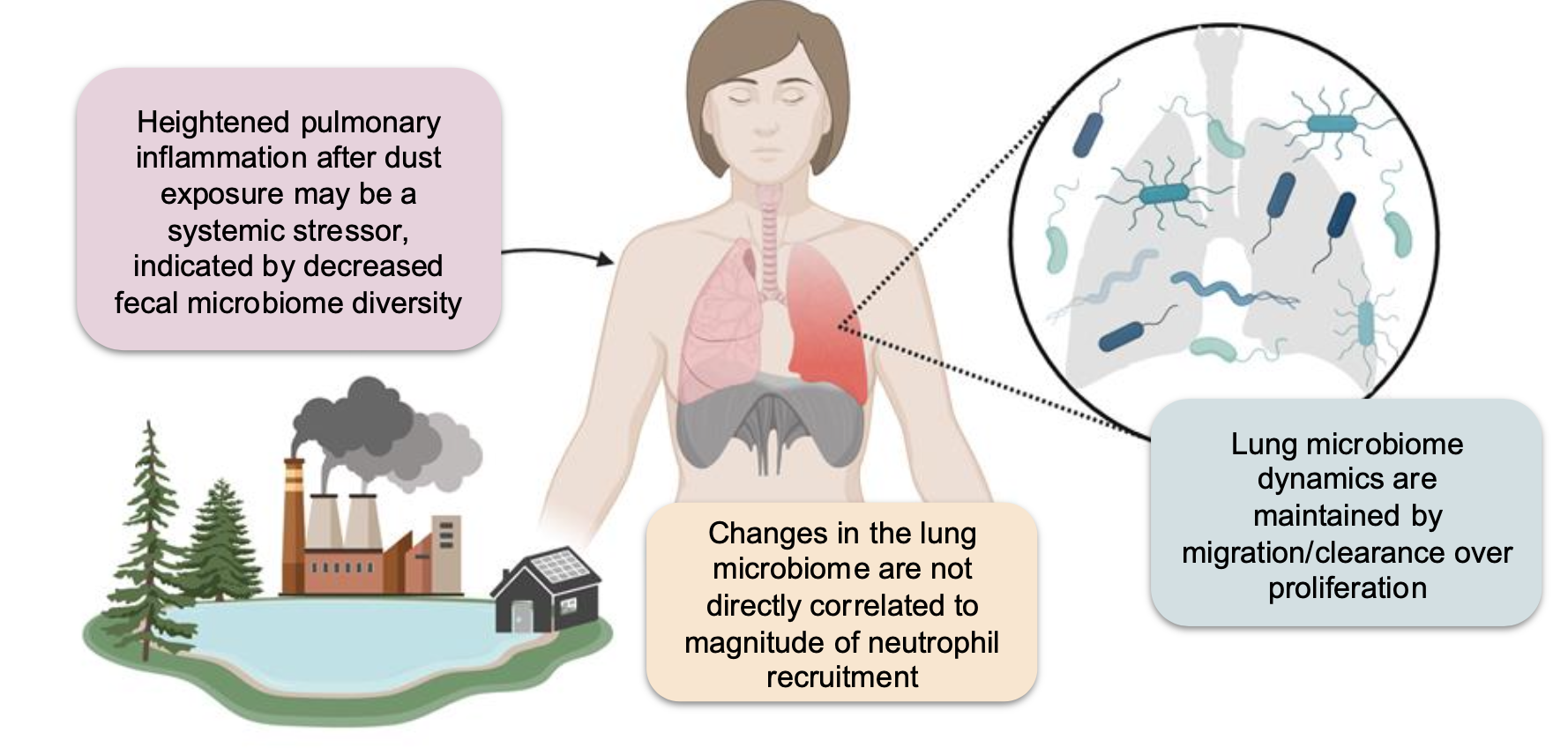 I received my PhD in Microbiology from the University of California-Riverside in 2025.
In my dissertation, Microbiome in the Middle: Examining the Lung Microbiome as an Interface Between Host and Environment,
I examined the host lung microbiome as a reflection of ones lived environment. My work specifically focused on health outcomes at California's Salton Sea Basin,
where pulmonary inflammatory cases are disproportionately higher than that of the whole state. Using a controlled aerosol exposure chamber system, I exposed mice to dust collected around the Salton Sea and characterized
their resulting pulmonary inflammatory state along with changes to their lung microbiome diversity and composition. I found that chronic exposure to Salton Sea aerosols correlated to significant increases in
neutrophilic pulmonary inflammation as well as significant changes to lung microbiome composition. Interestingly, these outcomes correlated with greater contributions from the actual Salton Sea lakebed present
in aerosol samples, leading to further explorations around the ecological health of the Salton Sea. Over the course of this work, I've become well versed in micro and molecular biology techniques, especially
DNA amplicon sequecing library prep and subsequent analyses, working with mouse model organisms, flow cell cytometry, histology staining and imaging, and collecting and analyzing environmental data.
I received my PhD in Microbiology from the University of California-Riverside in 2025.
In my dissertation, Microbiome in the Middle: Examining the Lung Microbiome as an Interface Between Host and Environment,
I examined the host lung microbiome as a reflection of ones lived environment. My work specifically focused on health outcomes at California's Salton Sea Basin,
where pulmonary inflammatory cases are disproportionately higher than that of the whole state. Using a controlled aerosol exposure chamber system, I exposed mice to dust collected around the Salton Sea and characterized
their resulting pulmonary inflammatory state along with changes to their lung microbiome diversity and composition. I found that chronic exposure to Salton Sea aerosols correlated to significant increases in
neutrophilic pulmonary inflammation as well as significant changes to lung microbiome composition. Interestingly, these outcomes correlated with greater contributions from the actual Salton Sea lakebed present
in aerosol samples, leading to further explorations around the ecological health of the Salton Sea. Over the course of this work, I've become well versed in micro and molecular biology techniques, especially
DNA amplicon sequecing library prep and subsequent analyses, working with mouse model organisms, flow cell cytometry, histology staining and imaging, and collecting and analyzing environmental data.
Relevant publications:
How do plant-microbe interactions benefit plant growth and yield?
Key words: plant-microbe interactions, rhizobacteria, bacterial symbioses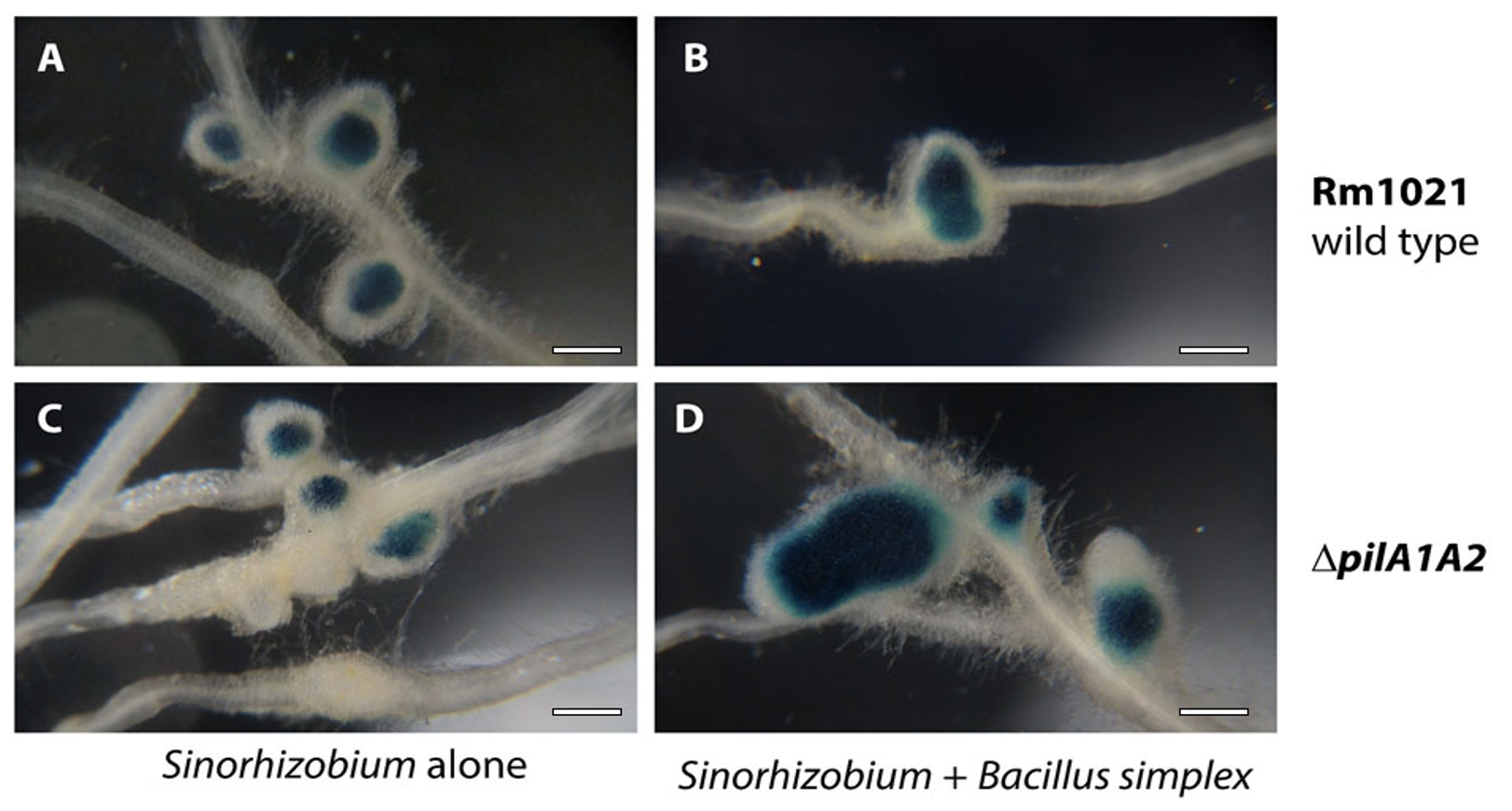 I finished my B.S. in Biology with a minor in Biochemistry at Loyola Marymount University in 2019.
My undergraduate research looked at plant-microbe interactions, and how a symbiotic relationship between two rhizobacteria
(Sinorhizobium meliloti and Bacillus simplex) enhances nodulation in white sweet clover, thus increasing plant growth. Assays included pairing "defective" strains of
S. meliloti with B. simplex to observe how Bacillus might rescue the nodulation effort of the inoculated communities.
Ultimately, related research in plant-microbe interactions and rhizobactria symbioses aim to address larger questions around agricultural yields via the rhizobiome or root microbiome.
Through this project, I had my first foray into handling plant model organisms, culture-based microbial assays, and basic molecular techniques.
I finished my B.S. in Biology with a minor in Biochemistry at Loyola Marymount University in 2019.
My undergraduate research looked at plant-microbe interactions, and how a symbiotic relationship between two rhizobacteria
(Sinorhizobium meliloti and Bacillus simplex) enhances nodulation in white sweet clover, thus increasing plant growth. Assays included pairing "defective" strains of
S. meliloti with B. simplex to observe how Bacillus might rescue the nodulation effort of the inoculated communities.
Ultimately, related research in plant-microbe interactions and rhizobactria symbioses aim to address larger questions around agricultural yields via the rhizobiome or root microbiome.
Through this project, I had my first foray into handling plant model organisms, culture-based microbial assays, and basic molecular techniques.
How can we characterize cacao fermentation microbiome?
Key words: fermentation microbiology, mycobiome, cacao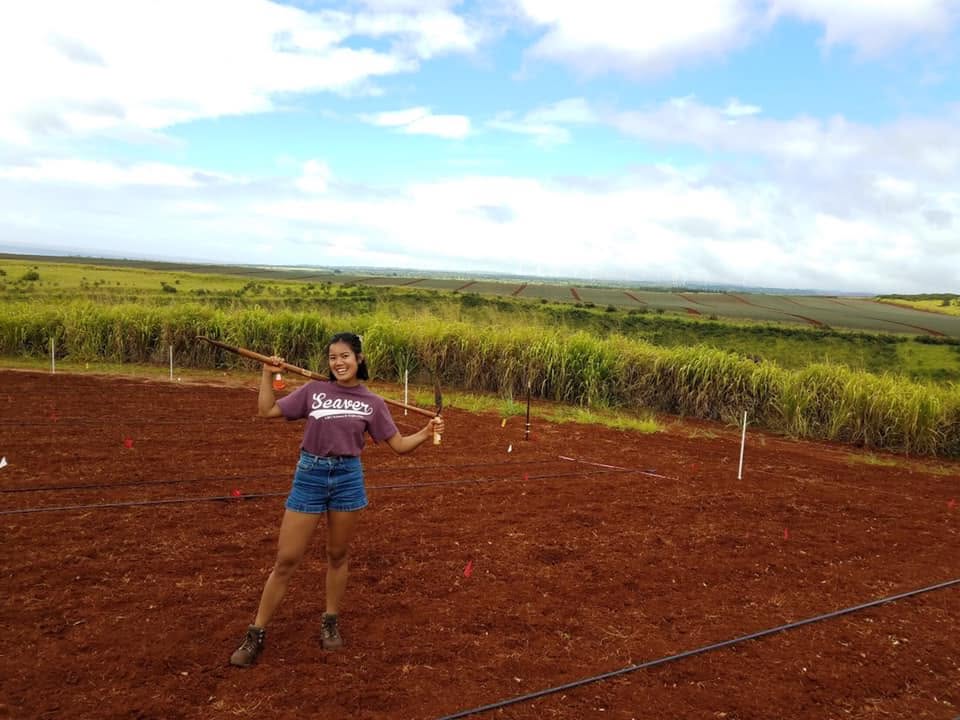 I had the privilege of participating in an NSF-REU at the University of Hawaii-Manoa in 2018. The objective of my project
was to characterize the mycobiome through the cacao fermentation process and correlate basic compositional changes with
phenolic compound reduction; in short, I isolated a lot of different fungi, made a whole lot of chocolate, and did a series of taste tests
to determine how a changing mycobiome correlates to a changing chocolate flavor. During this experience, I learned a lot about experimental
design and method troubleshooting. It was my first time handling a completely independent research project from design to execution and
in the process, I got to spend a ton of time visiting cacao farms around Oahu and learning about small scale chocolate production.
I had the privilege of participating in an NSF-REU at the University of Hawaii-Manoa in 2018. The objective of my project
was to characterize the mycobiome through the cacao fermentation process and correlate basic compositional changes with
phenolic compound reduction; in short, I isolated a lot of different fungi, made a whole lot of chocolate, and did a series of taste tests
to determine how a changing mycobiome correlates to a changing chocolate flavor. During this experience, I learned a lot about experimental
design and method troubleshooting. It was my first time handling a completely independent research project from design to execution and
in the process, I got to spend a ton of time visiting cacao farms around Oahu and learning about small scale chocolate production.
Courses Taught
Introduction to Microbiology
University of California, RiversideIn this upper division undergraduate course, students are introduced to the history of microbiology, basic culture and molecular based methods in microbiology, microbial genetics, pathology, and applications of microbiology in clinical and food industries. During discussion sections, students review classwork and apply concepts to experimental design and interpret hypothetical results.
Introductory Biology Lab I & II
Loyola Marymount UniversityIn these undergraduate laboratory courses, first year students learn basic techniques in culture-based microbial assays, microscopy, phylogenetics, and organism dissections. In the second semester, students build upon those techniques when desigining group research projects that utilize basic molecular methods including DNA extraction, amplification (PCR), and sequencing (Sanger). Students are guided through sequence data analysis and figure generation to present their findings in a class symposium.